
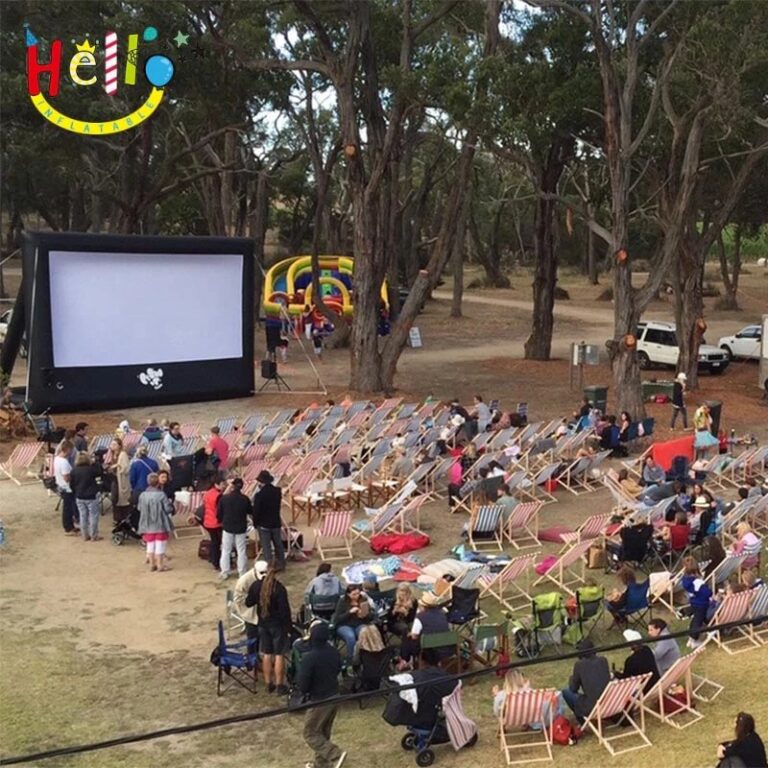
Choosing an outdoor projection screen is less about declaring one format universally superior and more about matching the structure to the venue, audience, crew, and weather plan. An inflatable movie screen makes a large visual landmark from a compact transport package, while a fast-fold screen uses a rigid sectional frame and a tensioned fabric surface.
For outdoor events, the decision usually turns on five practical questions: How large must the image be? How quickly can the crew load in? Is continuous power available? How exposed is the site to wind? And how important are silence and maximum surface tension? This inflatable screen vs fast-fold screen guide compares both systems using those event-production priorities.
How Do Inflatable and Fast-Fold Screens Differ?
Inflatable Movie Screen: Air-Supported Scale
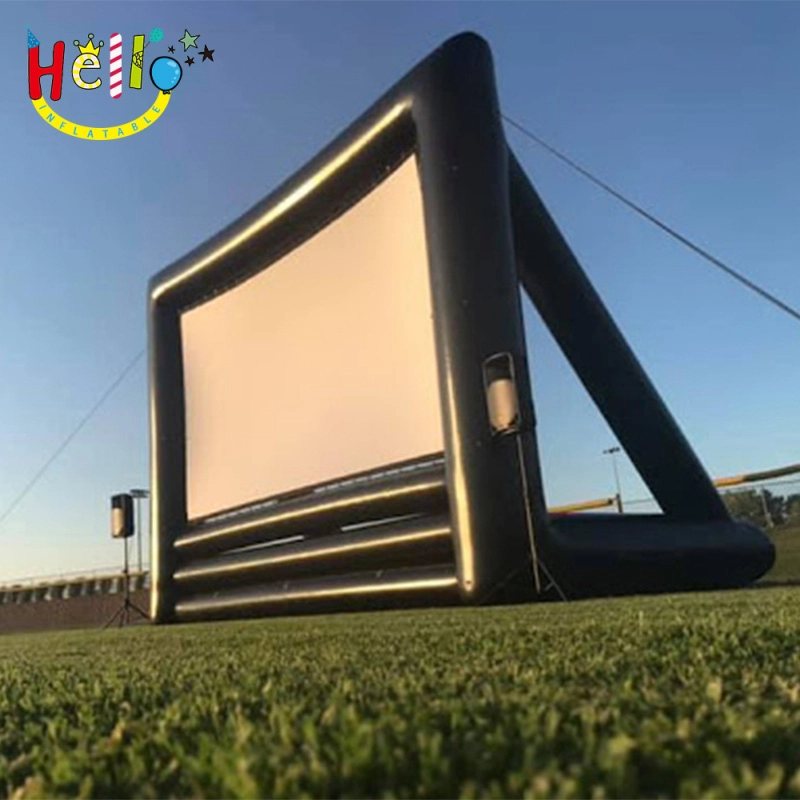
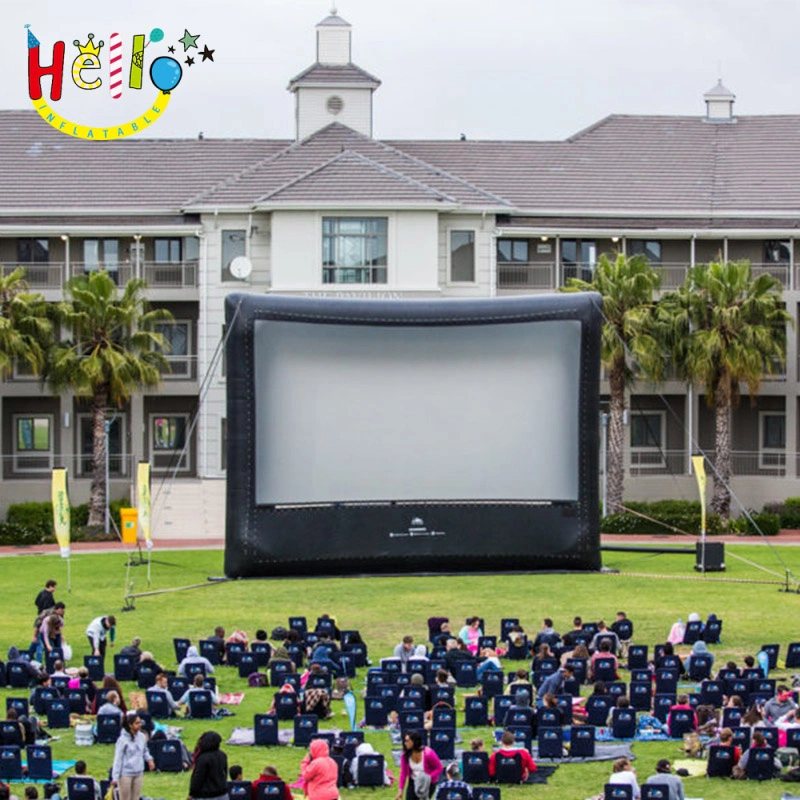
An inflatable outdoor movie screen uses an air-filled fabric frame to hold a white projection surface upright. A continuous-air model connects to an electric blower during use. Stable internal pressure keeps the frame shaped and the viewing area open. The unit deflates into a relatively compact package, so a very large screen can travel without long metal frame sections.
Fast-Fold Screen: Rigid Frame and Tensioned Fabric
A fast-fold screen is assembled from hinged or sectional metal members. The projection fabric snaps or attaches to the perimeter, and legs support the frame. It does not need blower power once erected. Because the surface is mechanically tensioned, it can deliver a particularly flat image plane, but the case, frame pieces, and larger models can be bulky to transport and handle.
Which Portable Outdoor Movie Screen Is Easier to Deploy?
Load-In, Crew Size, and Storage
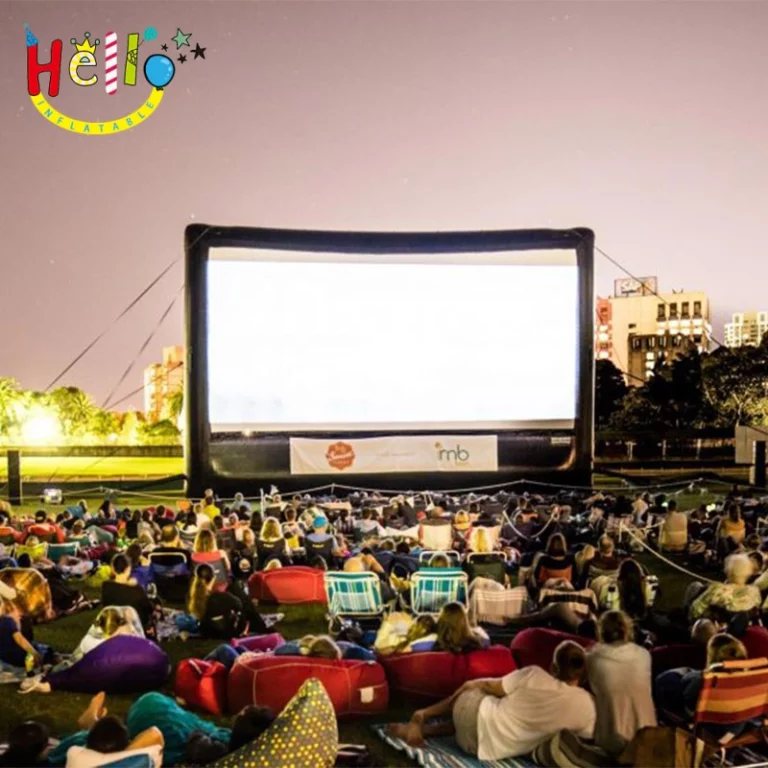
For touring shows, the portable inflatable movie screen has a strong logistics advantage. Roll out the frame, connect the blower, guide the structure as it rises, and anchor it. Fast-fold assembly is straightforward but requires identifying frame sections, locking joints, attaching the surface evenly, and lifting the completed structure.
Smaller fast-fold units suit compact venues. Inflatables become increasingly attractive as screen dimensions grow because they eliminate the need to transport long, heavy frame sections.
Power and Noise Trade-Offs
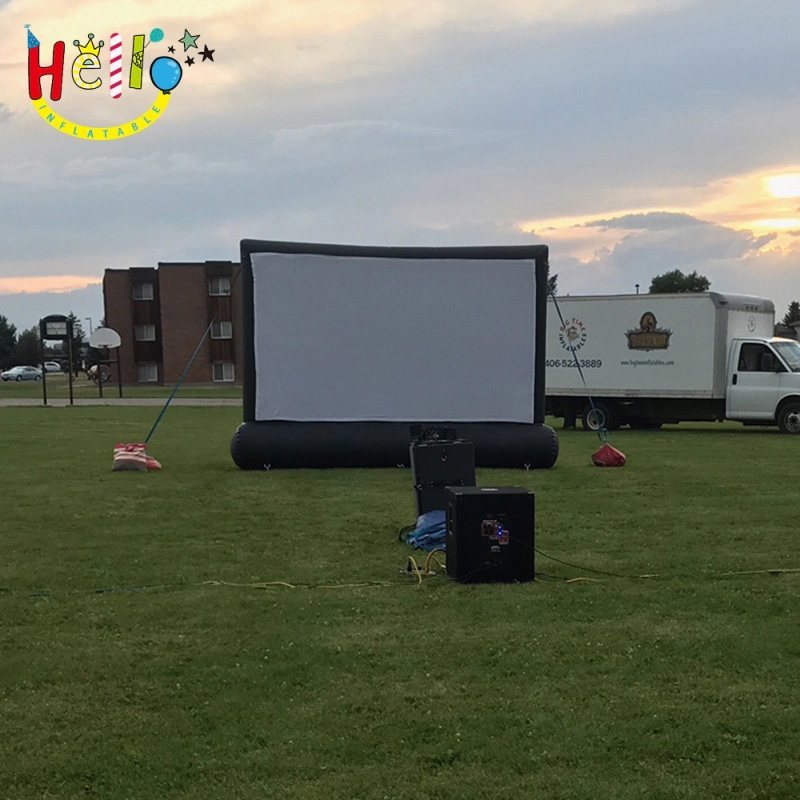
A continuous-air inflatable movie screen for outdoors needs reliable power and produces low, ongoing blower noise. Positioning the blower behind the frame and away from seating reduces its impact.
Fast-fold screens are silent and power-free after assembly. This makes them useful for quiet presentations, indoor-outdoor hybrid venues, or sites where electrical distribution is limited. However, organizers must still provide power for the projector, sound system, media equipment, and event lighting.
Inflatable Screen vs Fast-Fold Screen: Which Performs Better Outdoors?
Wind, Anchoring, and Site Safety
Both formats need a site-specific wind plan. A large surface behaves like a sail, regardless of frame type. The inflatable must use every specified anchor point, with ropes, stakes, or weighted ballast suited to the ground. A fast-fold frame also requires ballast and bracing outdoors.
Organizers should monitor forecasts and actual conditions at the site. They must follow the manufacturer’s wind limit and lower the screen when conditions exceed that limit. Never rely on the weight of the screen alone to keep it stable.
Inflatable structures may offer a practical emergency advantage because they can be rapidly deflated when conditions become unsafe. Nevertheless, deflation must be part of a documented shutdown plan rather than a substitute for proper anchoring.
Image Flatness, Ambient Light, and Projector Matching
Fast-fold tension can offer excellent flatness, especially for smaller corporate presentations. A well-made commercial inflatable movie screen maintains an even, smooth display through balanced airflow and correct installation.
In either case, nearby streetlights reduce contrast. Aim the screen away from direct light and begin critical viewing after dusk whenever possible. A matte white projection surface helps diffuse light and reduce distracting glare, but it cannot completely overcome strong ambient illumination.
Match the projector’s brightness, throw distance, resolution, and aspect ratio to the actual viewing surface. A 16:9 aspect ratio is the common choice for modern films and videos. A 4:3 aspect ratio is usually used for older films and videos and for certain presentations.
Which Screen Fits Different Outdoor Events?
Best Uses for an Outdoor Movie Screen for Events
Use inflatable screens in parks, festivals, school movies, brand activations, drive-in movies, and other events for big crowds, where visibility and large screen sizes are important. In addition, these screens are ideal for traveling between event locations while storing in a relatively small space.
Choose a fast-fold screen for smaller audiences, formal presentations, short indoor-outdoor moves, low-noise environments, and locations without convenient blower power. It can also be a good option when image flatness is the highest priority and the available screen size remains manageable.
For repeated commercial use, consider pack size, crew skill, replacement surfaces, repairability, and the total number of setups per season—not purchase price alone.
A Practical Decision Rule
In the fast-fold vs inflatable projector screen decision, use an inflatable when the event needs a large, dramatic, portable outdoor movie screen and can support power plus disciplined anchoring.
Use fast-fold when silence, a rigid tensioned surface, and compact screen size outweigh the transport burden. If wind exposure is severe or safe anchoring is impossible, neither format should be erected until conditions or the site plan change.
What Should Buyers Look for in a Commercial Inflatable Movie Screen?
Materials, Sewing, and Blower Reliability
For frequent outdoor work, inspect fabric strength, seam consistency, reinforcement at tie points, surface replaceability, and blower certification.
At HELLO INFLATABLE, we select materials according to the intended shape, dimensions, grade, and usage environment. Our production process uses precision sewing equipment and two to four high-strength bonded threads to create smooth seams, stable structures, and fewer wrinkles.
HD digital thermal-transfer and outdoor printing processes can provide clear, saturated, and durable colors when custom graphics are required. Our accessory packages can also include low-noise CE- and UL-certified fans, imported zippers, tie ropes, and sandbags. These details support stable operation, easier installation, and repeated commercial use.
Customization and Lifecycle Support
A professional system should be easy to inspect, clean, dry, repair, and pack. At HELLO INFLATABLE, we provide production tracking and remote setup guidance. Our manufacturing background covers 3D modeling, automatic cutting, precision stitching, and custom branding.
Customization may include different dimensions, frame colors, printed logos, sponsor graphics, and event-specific visual elements. This allows an inflatable screen to function as both projection equipment and a high-visibility branded structure.
After each event, wipe the surface, allow all fabric to dry fully, check the seams and anchor loops, and store the unit in a cool, dry place away from prolonged direct sunlight. Regular inspections can identify small holes or worn components before they affect an event. This maintenance routine protects both appearance and service life.
How Do You Plan a Reliable Outdoor Projection Setup?
Pre-Event Checklist for an Inflatable Movie Screen for Outdoors
Measure the clear footprint and overhead space before selecting the screen. Confirm the available electrical capacity, remove sharp debris, map the projector’s throw distance, and plan cable covers for areas crossed by staff or guests.
Test the media source, projector, sound system, blower, and all connections before event day. A complete setup rehearsal helps the crew identify missing accessories, power limitations, image-alignment problems, and sound-coverage gaps.
Position audience seating outside guy-line and ballast zones. Keep emergency and equipment access paths clear, and leave sufficient space behind the screen for the blower, cables, inspections, and adjustments.
The event plan should also identify a weather decision time and a person responsible for monitoring conditions. Clear authority prevents uncertainty when wind, rain, or electrical hazards require a delayed opening or rapid shutdown.
FAQ
Q: How does an inflatable movie screen work?
A: A blower inflates and supports the fabric frame, while anchors keep it stable and the white surface displays the projected image.
Q: How to set up inflatable movie screen equipment safely?
A: Choose flat, debris-free ground, secure all anchors, and connect the blower correctly. Keep guests away from guy lines, monitor the wind, and deflate the screen if conditions become unsafe.
Q: Is an inflatable screen vs. a fast-fold screen better in wind?
A: Neither format is automatically safe in wind. Both present a large sail area and require rated anchors, ballast, or bracing. The better choice is the system supported by a documented wind limit, appropriate site hardware, weather monitoring, and a clear shutdown plan.
Q: What size inflatable outdoor movie screen should an event use?
A: Screen size depends on audience depth, viewing distance, venue width, and projector brightness. Small gatherings may use a 12–16-foot screen, while public events with more than 200 guests often benefit from a screen measuring 24 feet or larger. Always confirm the visible projection area rather than relying only on the outside frame dimensions.