
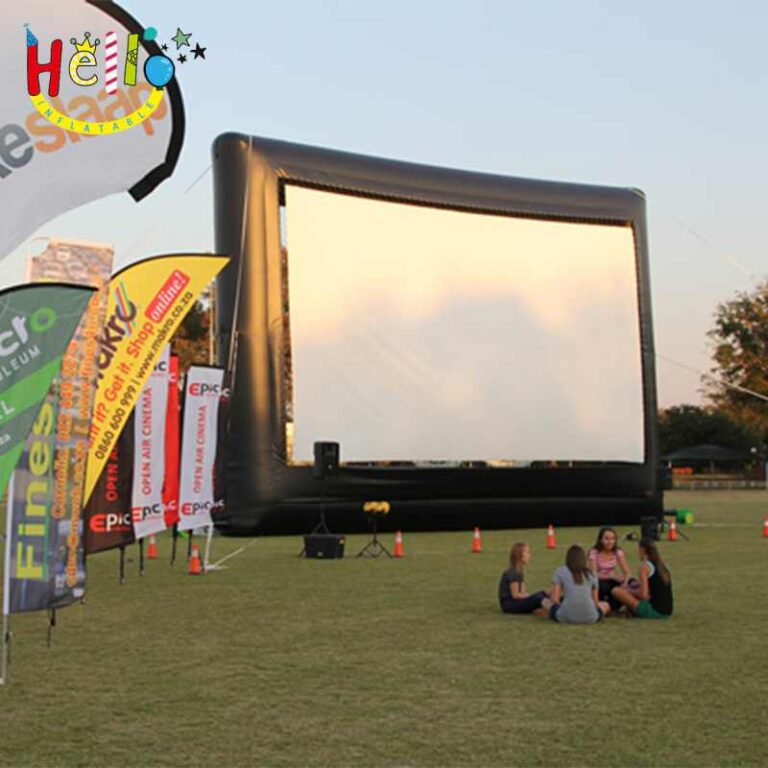
How Do Inflatable Movie Screens Work?
What Are the Core Components of an Inflatable Movie Screen?
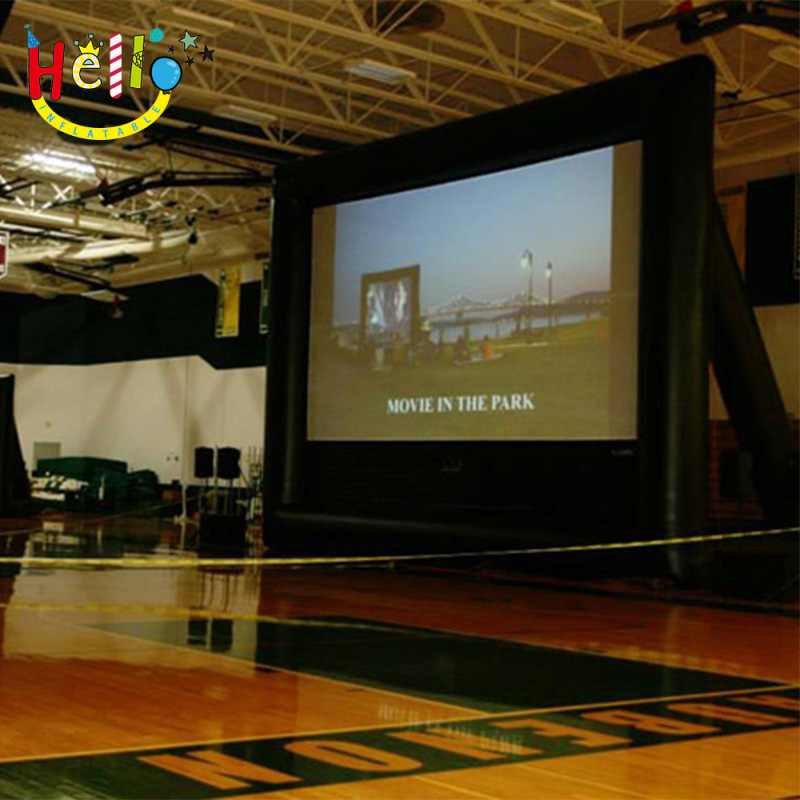
An inflatable movie screen works as a portable surface for showing movies. It rests on a frame filled with air. The main body uses strong PVC or Oxford fabric. This fabric gives the frame both flexibility and strength against the weather. A steady air blower keeps the pressure inside the frame. The frame stays upright and firm while the screen runs. The viewing surface is usually a matte white fabric. Workers stretch it tightly across the frame. This keeps the image smooth and free of folds or bends.
Inflatable models work well for many uses. These include holiday parties, art displays, stage setups, and city art scenes. They serve both as promotion tools and decoration pieces. They create strong visual effects and improve the mood at events. They also play a key role in modern event planning and design. The same idea applies to inflatable cinema screens. Their light but solid build helps them deliver clear viewing in open spaces. They are easy to carry and set up.
How Does the Inflation and Airflow System Function?
The air system uses steady airflow. Blowers push air into the sealed parts of the frame. This keeps the frame stiff. The design handles wind well. Small leaks do not affect the balance. Blower size depends on the screen. Smaller screens often use 250W motors. Larger commercial screens may need up to 750W per blower for best results.
Advanced models add air pressure sensors and auto valves. These parts release extra air or adjust for temperature shifts. The balance stops overinflation. It also keeps the frame solid during long shows.
How Does HELLO INFLATABLE Ensure Frame Stability and Safety?
HELLO INFLATABLE adds several support features to each design. These features ensure safety during long outdoor use. Stronger seams cut the risk of air loss. Weighted anchors and tie points hold the screen against wind. Safety flaps sit in key spots. They stop fast deflation if power stops.
We keep improving the air system. This raises the stability and life of the inflatable model. We pick special materials to keep products safe and well-made. We also use modern production tools. These tools raise output speed and quality. The steps keep the frame shape steady, even in multi-day events.
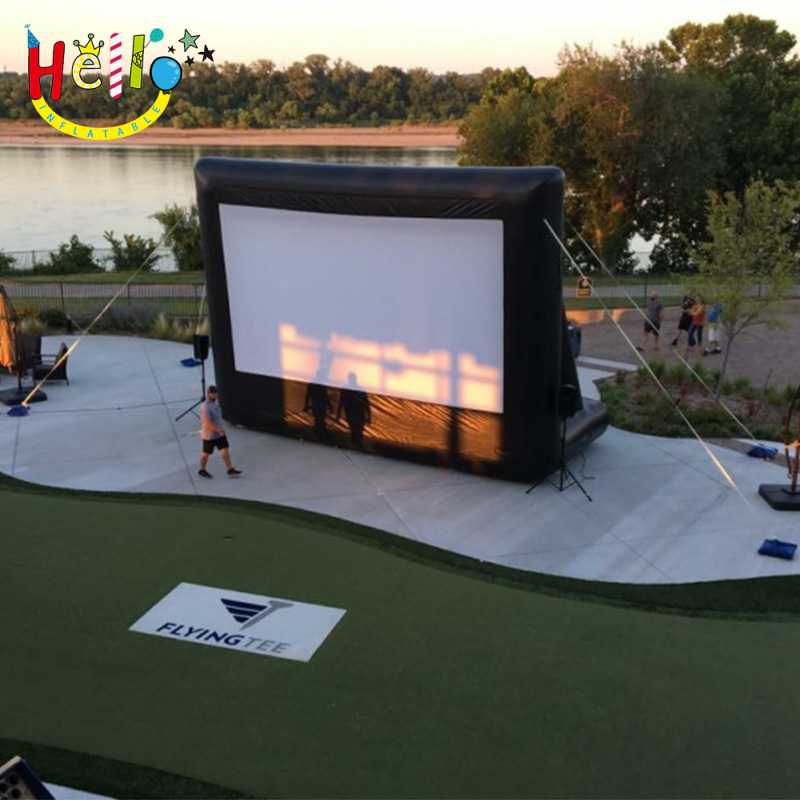
What Determines the Performance of Inflatable Projection Screens?
How Do Material Choices Affect Image Clarity and Durability?
Fabric choice affects brightness, color, and how long the screen lasts. Matte white surfaces are common. They spread light evenly and give good brightness from wide angles. Multi-layer fabrics reduce wrinkles. They also resist shape changes from repeated inflation. UV coatings block sun damage. This stops fading or yellowing. The coatings matter for outdoor use.
High-definition thermal transfer printing puts patterns on the fabric. Colors stay bright, and details stay clear. The dye holds for a long time and does not fade. High-precision cutting tools shape the patterns with care. This standard keeps surfaces clear even after many uses.
What Are the Blower Power Requirements for Optimal Performance?
Blower power decides how well the screen holds shape in different conditions. Screens under 12 feet wide often use 250–300W blowers. These give enough airflow in CFM. Larger screens over 20 feet need dual 500–750W blowers. They run together to keep the pressure right.
Good electrical setup matters. Grounded outlets and circuit protection help. They support steady airflow and stop overheating or power drops during long events.
How Does Screen Tensioning Influence Projection Quality?
Tension tools control how flat the surface stays after inflation. Adjustable straps or bungee cords help fine-tune the fit. This works for indoor light control or outdoor wind. Even tension removes sagging or warping. These issues could bend the image or change aspect ratios.
Good alignment between the projector lens and screen curve keeps focus sharp in all corners.
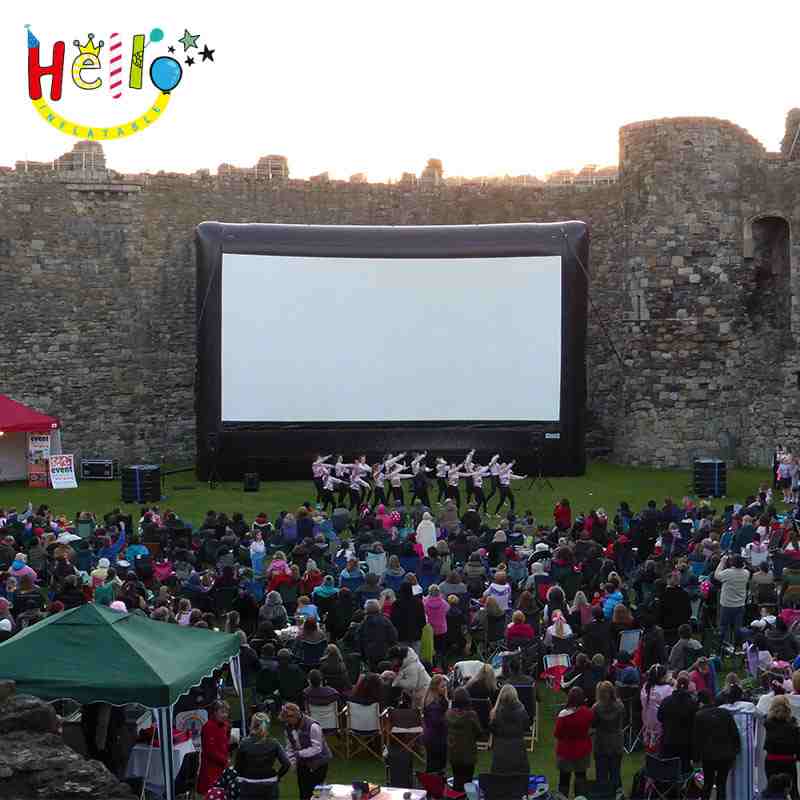
How Do Front vs Rear Projection Inflatable Screen Mechanics Differ?
What Is the Principle Behind Front Projection Systems?
Front projection places the projector and viewers on the same side. Light bounces off the matte white surface toward the audience. This gives higher brightness. It suits controlled light settings like evening shows or indoor halls. Light reflection drives this setup. Contrast depends on managing background light.
How Does Rear Projection Work on Inflatable Screens?
Rear projection uses a semi-translucent layer instead of a reflective coating. The projector sits behind the screen. Light passes through the layer. Diffusion layers spread light evenly across angles. They also stop hot spots near the beam center. This reduces shadows from people walking in front of the beam. Such shadows often appear in public areas.
HELLO INFLATABLE builds dual-surface models. These switch between front reflective mode and rear transmissive mode based on event needs.
When Should You Choose Front or Rear Projection for Outdoor Events?
Front projection gives strong brightness. It needs an open space between the projector and the screen. It works well when viewers sit far from blocks like trees. Rear projection works where space behind the screen allows safe gear placement. It removes shadows from moving people. It also shields projectors from the weather.
Planners check light levels, viewer distance, and site shape before choosing a setup for inflatable movie screens.
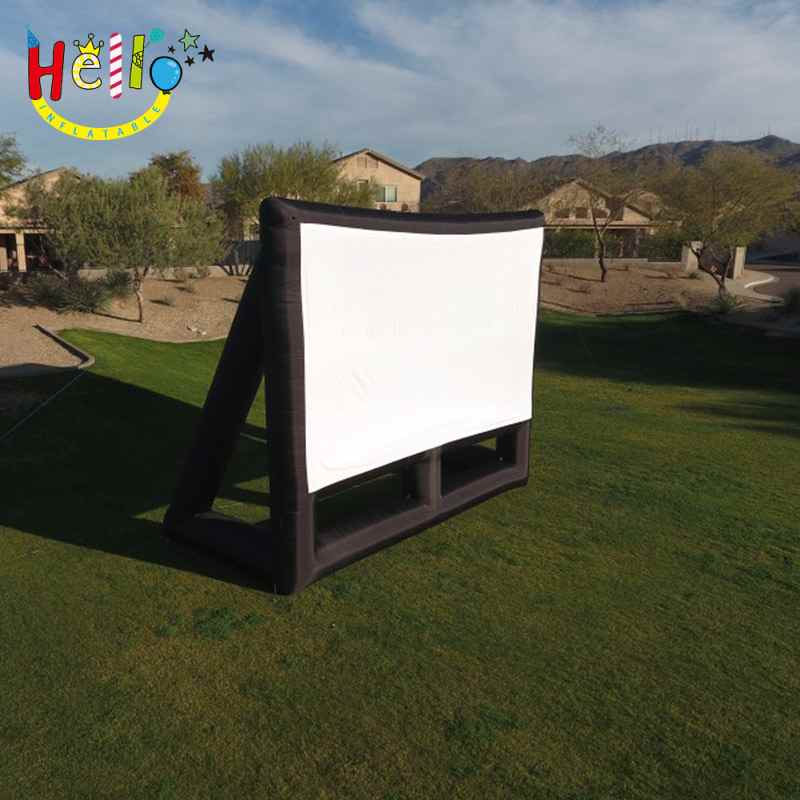
What Features Define Commercial Grade Inflatable Cinema Screens?
How Are Commercial Models Engineered for Long-Term Use?
Commercial screens handle frequent moves, setups, and outdoor use without losing quality. Heavy Oxford cloth or PVC fabrics resist UV rays, moisture, and wear from repeated inflation. Reinforced stitching holds high tension on large frames in the wind.
We use high-quality plain twill heat transfer fabric. We pair it with strong sewing skills. This creates stable frames and clean lines. The build rules support professional use in touring festivals or city screenings.
Modular parts make service easy. Detachable blowers, replaceable valves, and separate anchors allow quick fixes between events.
What Design Elements Enhance Professional Viewing Experiences?
Professional setups add optical upgrades. Black backing layers block light bleed and raise contrast. Sound-neutral materials keep audio clear when speakers sit behind rear surfaces. Quiet blowers stay below 60dB. Quick-inflate valves cut setup time. This speed helps during large festivals.
HELLO INFLATABLE standards match fire safety rules like EN71 and EN14960. This ensures compliance with global event safety needs while keeping image quality high over long use.
Why Do Professionals Prefer HELLO INFLATABLE Screens for Events?
Our team focuses on careful work from digital models to the final build. We use industrial sewing tools and weather coatings. A steady frame shape ensures image alignment at many sites despite ground or weather changes.
HELLO INFLATABLE was established in 2014. Since the start, we have followed the idea of quality first, unlimited creativity, and service first. Our company aims to deliver top-quality and creative inflatable products to every customer. This view supports ongoing work on custom sizes for small backyard cinemas and large outdoor festivals.
FAQ
Q: How do inflatable movie screens work in outdoor environments?
A: Inflatable movie screens use steady air from electric blowers. The air keeps the frame firm. Images project onto a tensioned surface built to handle wind and temperature shifts in open events.
Q: What are the blower power requirements for inflatable projection screens?
A: Blower power changes with size. Compact models often need around 250W per unit. Commercial setups may need over 700W total to hold pressure during long shows.
Q: How does an inflatable movie screen differ from a traditional fixed-frame screen?
A: Rigid aluminum frames need fixed installation. Inflatable versions use air frames. They move easily between sites and pack small after deflation. They suit mobile cinemas or short exhibitions.
Q: Can inflatable screens support both front vs rear projection mechanics?
A: Yes. Many designs use dual-layer fabrics. Operators switch between front reflective mode and rear transmissive mode based on site limits.
Q: What makes the commercial-grade inflatable cinema screen features superior?
A: Professional units use reinforced Oxford fabrics with UV coatings. They have industrial stitching tested in strong winds. Low noise blowers meet CE/UL standards. Modular anchors support repeated use without loss of image quality or safety compliance. At HELLO INFLATABLE, these systems are engineered with strict quality control to ensure stable performance in demanding outdoor environments..