
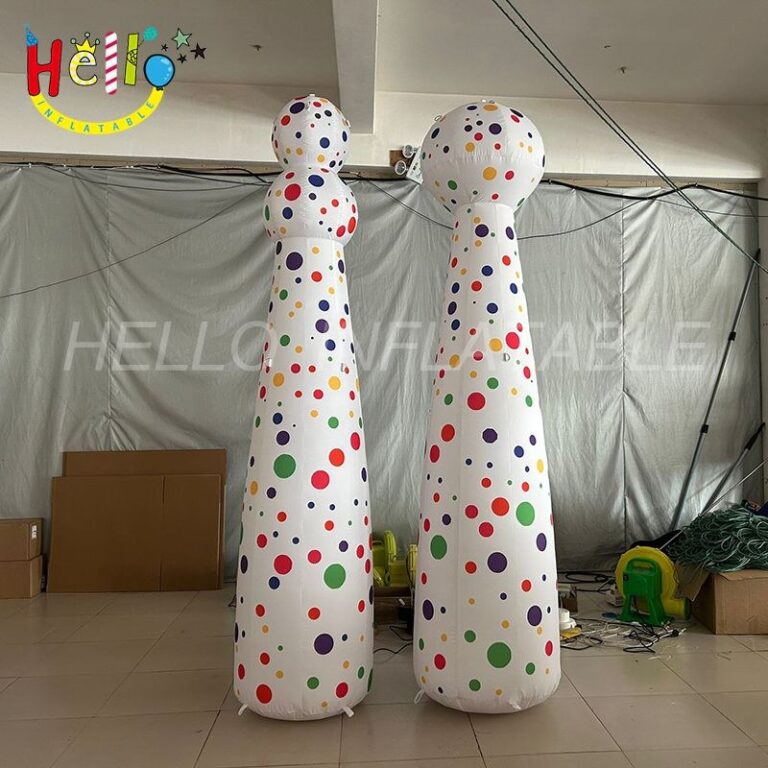
A custom inflatable tube can do far more than wave beside a storefront. Used with a clear spatial plan, tubes can mark an entrance, frame a stage, guide visitor flow, carry sponsor graphics, or become a sculptural layer inside a brand activation. Their height creates visibility over crowds, while their soft construction and compact packed size make large visual gestures easier to transport than rigid scenery.
The strongest results come from treating the tube as part of the event architecture. Its scale, movement, color, print, lighting, airflow, and anchoring should support what guests need to see and do. The following approach turns an inflatable tube for events into a practical design system rather than an isolated decoration.
Where Should an Inflatable Tube for Events Be Placed?
Create a Visible Arrival Sequence
Place a matched pair before the decision point where guests choose between registration, general admission, VIP access, or a sponsor zone. Keep logos above head height and preserve the full required width of doors, queues, and emergency routes. A symmetrical pair feels formal; an offset cluster feels energetic and can pull attention toward a secondary entrance.
Use Event Inflatable Tubes as Wayfinding Landmarks
Repeat one color or graphic rhythm at the parking approach, ticket check, activation entrance, and exit. Guests can then navigate by recognizable forms instead of reading dense signs. Do not let moving tubes obscure official wayfinding. Their job is to attract the eye first, then hand attention to short, legible directional copy.
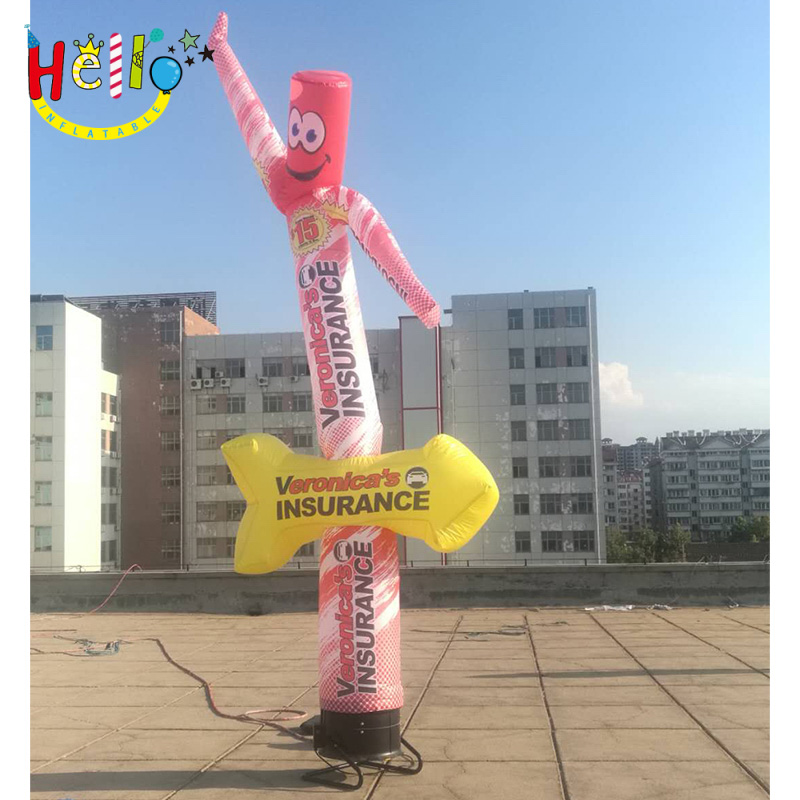
How Can Custom Inflatable Tubes Shape a Stage?
Frame Performers Without Closing the Sightline
Use tall tubes at the outer stage edges to widen the visual frame, or place lower curved forms around a DJ booth, riser, or scenic portal. Check the design from the front row, back of house, side seating, broadcast cameras, and vertical social-video positions. No tube should cover performers, screens, lighting beams, exits, or crew routes.
Build Depth With Scale, Rhythm, and Light
Combine a hero tube with smaller supporting forms rather than lining up identical pieces. Repetition creates rhythm; changes in height create depth. Internal waterproof LED strips can produce an even glow, while uplighting reveals surface curves. Coordinate access, power, heat clearance, dimming, and cable protection before fabrication instead of adding lighting after the structure is finished.
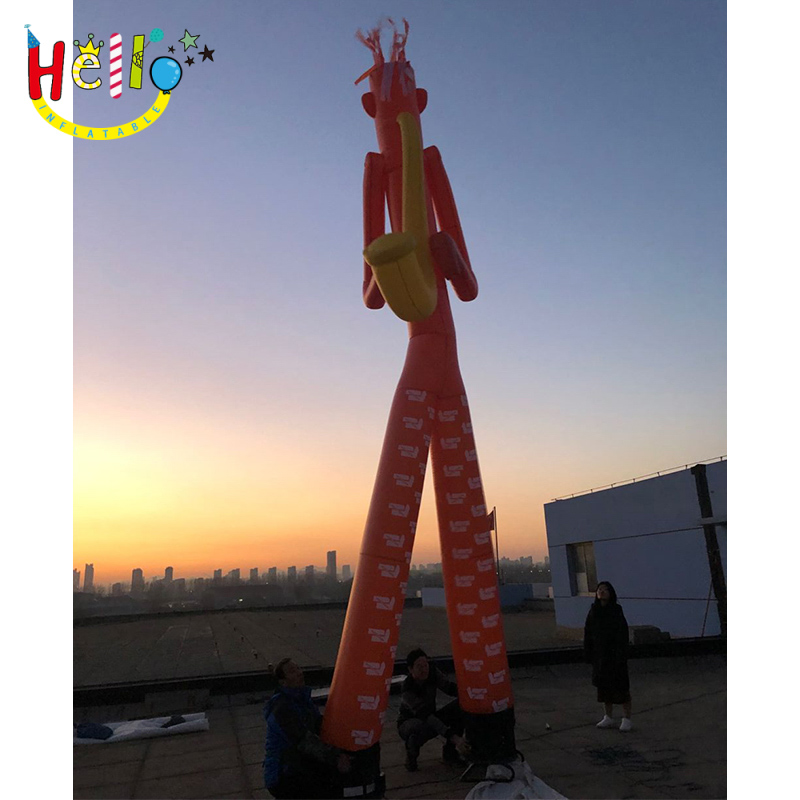
What Makes a Branded Inflatable Tube Effective?
Design for Distance Before Detail
At long range, viewers notice silhouette, motion, and large color fields. At medium range, they read a logo or a short phrase. Fine copy belongs near the interaction point, not high on a moving surface. For a branded inflatable tube, reserve the cleanest face for the primary mark and use high contrast so the identity survives movement, folds, stage light, and photography.
Turn the Structure Into a Photo Moment
Angle a pair of tubes to frame people rather than hiding them. Add a clear standing point, flattering front light, and enough depth between the guest and the graphics. If the activation tours, create one repeatable camera composition and document the approved positions of every tube, light, blower, cable, rope, and ballast point.
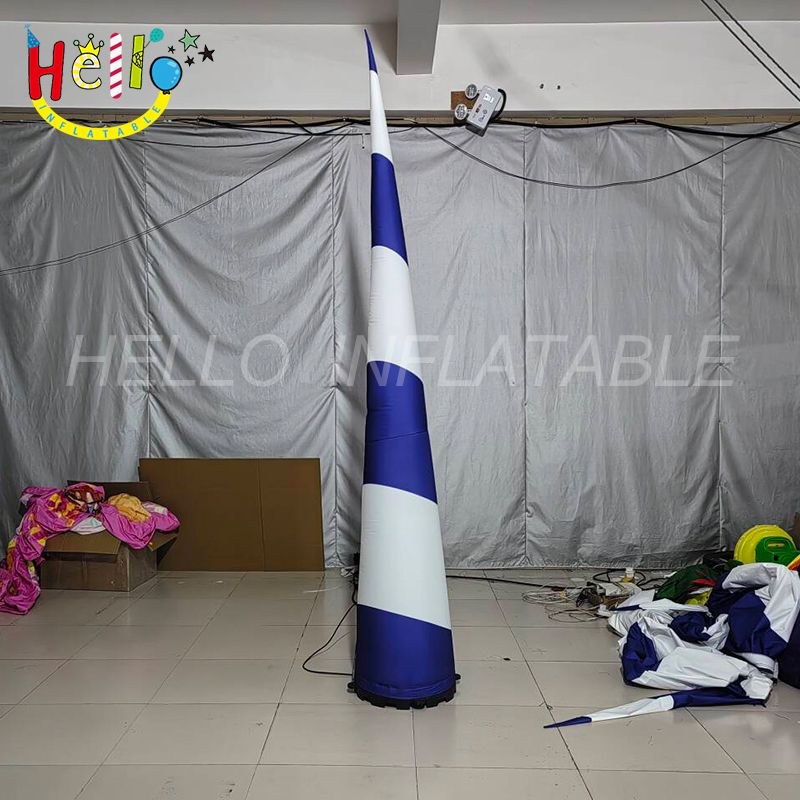
How Should a Custom Inflatable Tube Design Be Specified?
Start With a Scaled 3D Design
Provide the venue plan, target height, viewing distance, indoor or outdoor use, operating hours, brand files, exact color references, desired motion, and installation constraints. At HELLO INFLATABLE, we translate the brief or reference image into a 3D design before production. Reviewing proportions, seams, logo orientation, air inlets, attachment points, and lighting in that model reduces surprises on site.
Match Materials and Printing to the Use Case
Material choice may include PVC Oxford fabric, PVC tarpaulin, or rip-stop nylon, depending on size, finish, packed weight, lighting, and exposure. Our high-definition thermal-transfer process prints artwork on transfer paper, bonds it into suitable fabric under heat and pressure, and supports saturated colors, gradients, detailed lines, and improved resistance to cracking or peeling. Automated cutting and precision sewing help preserve the intended shape.
Plan Airflow, Accessories, and Service Access
A continuously inflated moving tube needs a compatible blower and uninterrupted power; a static form may use a different air system. Specify destination voltage and matched plugs. A complete event package may include ropes, sandbags, a repair kit, storage bag, and instructions. Leave safe access for inflation equipment and keep intakes, cables, and deflation points away from guest traffic.
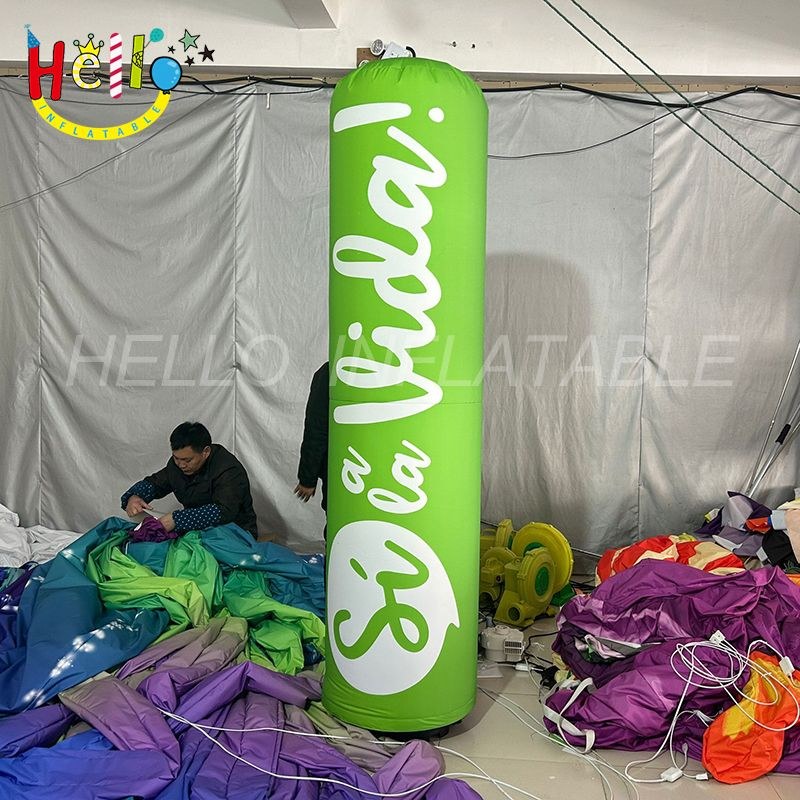
How Do You Install and Reuse Event Inflatable Tubes Safely?
Test the Complete Setup Before Show Day
Inflate every piece with the actual accessories, then inspect seams, attachment points, print alignment, lighting, blower noise, airflow, and stability. HELLO INFLATABLE applies full-process quality checks, and the event team should add a venue-specific trial. For outdoor use, confirm approved anchors and operating limits, monitor weather, protect electrical connections, and follow the venue’s stop-use procedure.
Pack a Repeatable Touring Kit
Label each component and photograph the approved setup from several angles. Keep tubes dry and clean before packing, fold them without crushing accessories, and record repair or replacement needs after every event. Reusable branded pieces can lower cost per activation when graphics, dimensions, and hardware are planned for more than one venue.
FAQ
Q: What size custom inflatable tube works best for an event entrance?
A: Base the size on the entrance width, ceiling or rigging height, audience distance, traffic volume, and required clearances. A scaled elevation is more reliable than choosing by height alone. Pairs should frame the opening without narrowing doors, queues, or emergency access.
Q: Can an event inflatable tube be used outdoors?
A: Yes, when its material, airflow system, anchoring, electrical protection, and stated operating limits suit the location. Use the approved ropes, ballast, or other site-permitted anchors, monitor conditions, and deflate the structure whenever weather or venue procedures require it.
Q: How does an inflatable movie screen work, and what can its inflatable design teach us?
A: An inflatable movie screen uses an air-supported frame to hold a projection surface in position. The useful inflatable design lesson is that airflow, tension, shape, and anchoring work as one system. Custom tubes need the same coordinated thinking even when their purpose is scenic or promotional rather than projection.
Q: How to set up inflatable movie screen systems compared with a branded inflatable tube?
A: Both begin with a clear site, correct orientation, suitable power, inflation, and secure anchoring, followed by a full stability inspection. A movie screen also requires a tensioned viewing surface and projector alignment; a branded tube requires correct graphic orientation, safe blower access, and planned clearance from guests and equipment.