
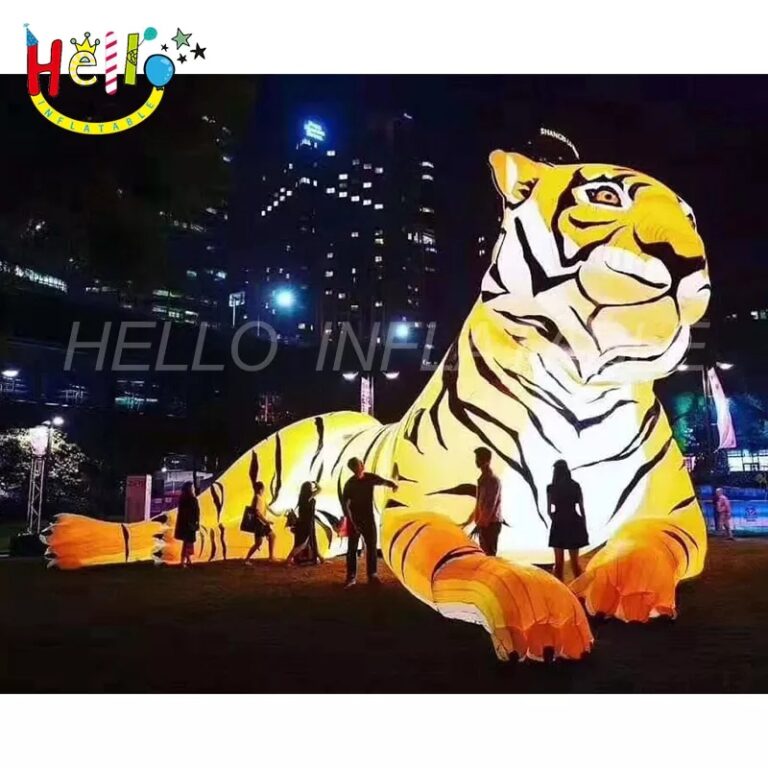
An inflatable animal turns a bare plaza into a spot for photos or changes a performer into a walking sea creature. Top designs go beyond just making a known shape bigger. They turn body structure, color, airflow, motion, and viewer distance into a steady 3D shape.
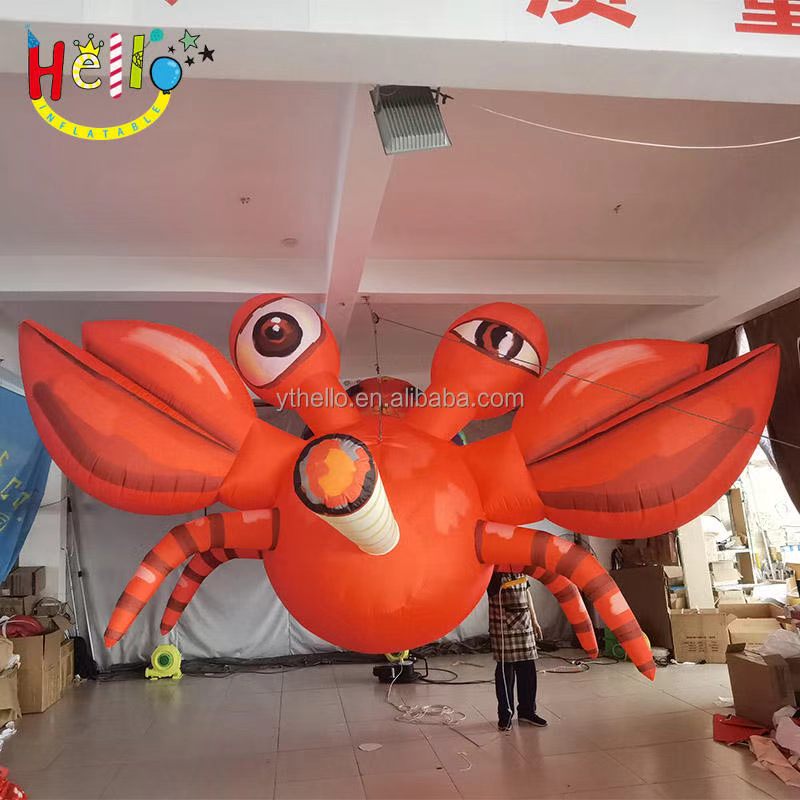
That design logic shifts with the format. A giant tiger needs to keep a clear outline across a venue. An inflatable crab costume must stay light, well vented, steady, and lively at walking speed. This guide shows how both formats move from idea to finished inflatable.
How Does an Inflatable Animal Design Begin?
Define the Viewing Distance and Event Role
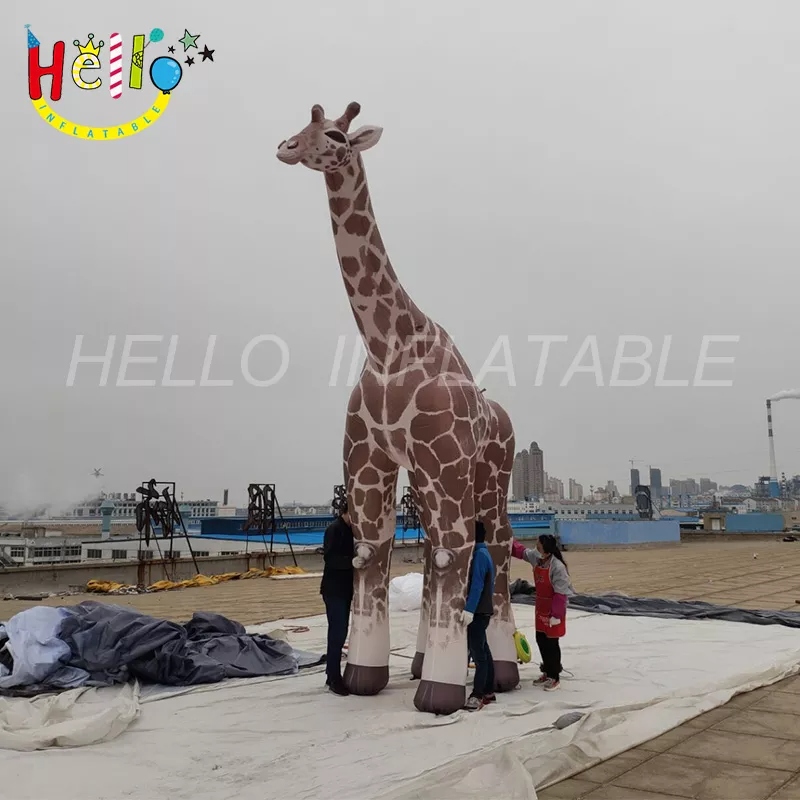
Start with what the audience should notice first. At long range, the species shows up through outline. A giraffe needs a long neck, a crab needs wide claws, and an octopus needs a clear tentacle rhythm. Close-up setups can add finer markings, facial details, and branded touches. The planned spot, such as a mall atrium, festival gate, parade, stage, or photo area, also sets size, anchors, lights, and how close people get.
Convert References into a Buildable 3D Form
A practical custom inflatable animal workflow starts with client photos, sketches, or an IP model and turns them into 3D artwork. Designers cut back on weak details, split the surface into sewable panels, and check if the inflated shapes will hold the planned pose. This digital step stops a bold drawing from turning into an unsteady object.
What Makes Giant Inflatable Animal Displays Look Convincing?
Proportion, Surface Graphics, and Structural Volume
Large inflatable animal displays depend on careful exaggeration. Bigger eyes, paws, horns, or claws can help recognition, yet the torso and limbs still need enough internal space to avoid folds. High-definition heat-transfer printing puts gradients, fur patterns, shells, scales, and sponsor graphics onto the fabric before cutting. Accurate automated cutting then helps panels join cleanly and keeps outlines smooth after sewing.
Placement, Blower Access, and Weather Planning
A giant inflatable should fit into the site plan. Allow hidden but easy blower access, keep intake zones clear, and set anchor points along the load path. Outdoor versions also need a weather plan, UV-aware fabric choice, safe power links, and a shutdown limit based on the supplier’s rules and local conditions.
How Is an Inflatable Crab Costume Designed for Movement?
Balance the Shell, Claws, Legs, and Performer
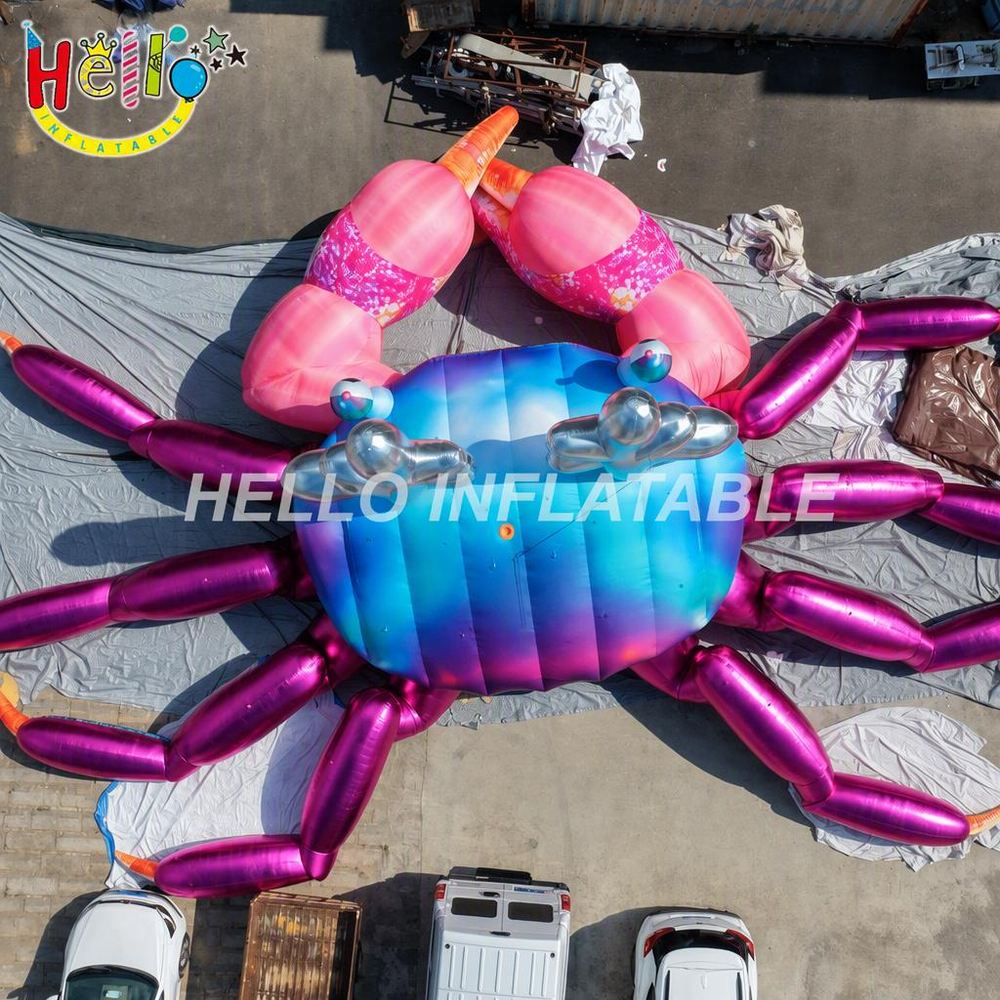
An inflatable crab costume follows different engineering rules than a fixed display. The shell should rest near the performer’s center of mass. Claws and side legs must stay light to avoid pulling the body off balance. A clear viewing window, good step room, and a firm internal harness make turns and short shows steadier. Rounded parts also cut down on snags in crowds or backstage halls.
Use Continuous Airflow Without Blocking Performance
Most walking inflatable costumes rely on a small fan to keep positive pressure. The pattern must move air around the full shape without pressing fabric against the performer. Battery spot, zipper access, fan guards, vents, and an emergency exit form part of the design from the start. Rehearsals should check visibility, turn radius, doorway fit, battery life, and talk with a spotter.
Which Materials and Production Steps Shape the Final Result?
Fabric and Printing for Detailed Inflatable Animals
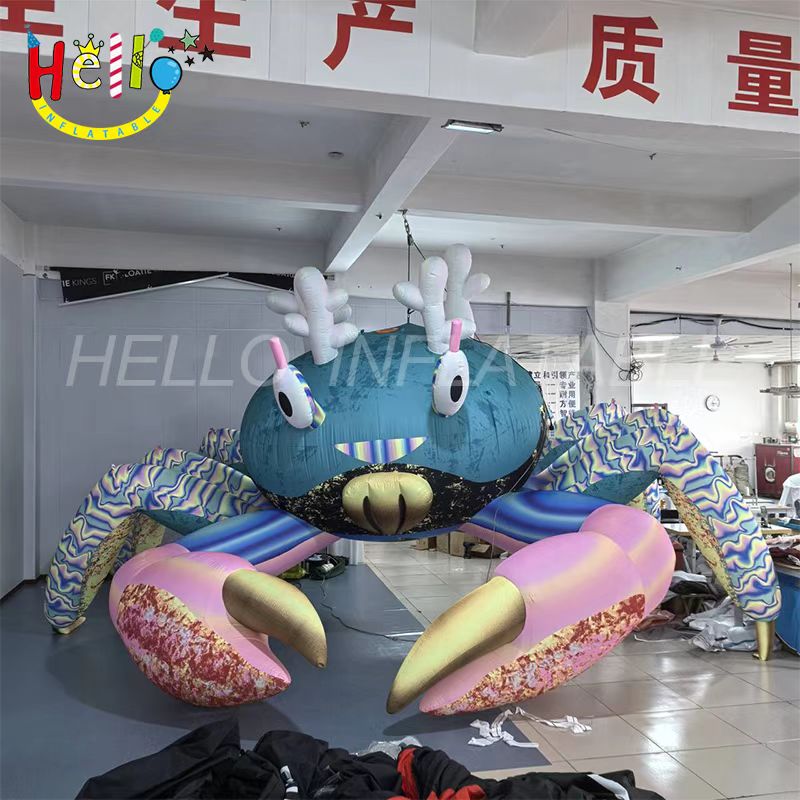
Material choice follows use. Light heat-transfer fabric works for detailed indoor displays and costumes. Heavier woven fabric may suit bigger outdoor pieces. At HELLO INFLATABLE, we use heat-transfer printing to place the artwork on plain or twill fabric, then apply precision cutting. This order keeps markings lined up with panel shape instead of adding decoration as a last layer.
Sewing, Reinforcement, Inflation, and Quality Checks
Cut panels are sewn into the planned volumes. Reinforcement goes at stress spots such as anchors, handles, zippers, and sticking-out limbs. The first inflation shows issues that stay hidden when flat, like uneven seams, soft ends, warped faces, or blocked air paths. Our quality process checks shape, airflow, build quality, accessories, and packing so the inflatable sets up fast and stores small after use.
How Do You Choose Between a Display and an Inflatable Animal Costume?
Choose a Giant Display for Landmark Visibility
Pick a static or tethered display when the goal is long-range visibility, a branded photo spot, or a short-term venue marker. Inflatable tigers, bears, marine animals, and fantasy creatures can fill vertical space without the weight and storage needs of rigid scenery. The trade-off is a greater need for site access, steady power, anchors, and weather monitoring.
Choose a Costume for Interaction and Mobile Storytelling
Pick a wearable format when the animal must greet guests, lead a parade, appear on stage, or move through a campaign. An inflatable crab costume makes wide side-to-side motion, which shows up well in photos and short videos. HELLO INFLATABLE can adapt the same animal idea across display and performance formats while keeping key colors, expression, and brand cues.
FAQ
Q: What is the best material for an inflatable animal?
A: The best material depends on scale and use. Light printed fabric works for detailed indoor displays and costumes, while heavier woven fabric may suit bigger outdoor setups. Check fire, toy, or amusement-product rules that apply in the target market.
Q: How long does a custom inflatable animal take to make?
A: Timing depends on design approval, 3D modeling, printing, cutting, sewing, testing, and shipping. Complex anatomy, lighting, moving parts, or matched brand colors add review rounds, so lock the event date and artwork early.
Q: Is an inflatable crab costume safe to wear?
A: It can be safe when it provides clear vision, ventilation, guarded fans, a secure battery spot, enough step room, and a quick exit. The performer should rehearse, avoid stairs and high winds, stay hydrated, and use a spotter in busy areas.
Q: Can an inflatable animal be used outdoors?
A: Yes, if it is built for outdoor use and set up per its instructions. Proper anchors, clear blower intakes, protected power, dry storage, and weather checks are key. Deflate it when conditions exceed the approved limits.